
Greene County Released Booking Photos
A booking photograph records appearance at intake. Release does not erase it, and the image does not state whether the charge ended in conviction, dismissal, restriction, or another outcome. Pair it with the jail discharge record and court disposition when identity or case context matters.
Georgia treats booking photos within its open-record framework but places special limits on disclosure. O.C.G.A. 35-1-19 restricts law-enforcement release when a requester intends to publish the image and then require payment for removal. That rule means a photo can exist in the sheriff's file even when an official site does not display it.
The Greene County Sheriff's Office is the custodian for a county booking photo. GDC is the source for a state-offender image. Neither should be confused with a copied image on a private site or an old news page.
Greene County Mugshot Source Map
No official Greene County web roster, recent-release feed, or booking-photo list was confirmed in the research sweep. The practical route is a sheriff records request. Other channels apply only when the person's custody history fits them.
| Channel | Has photo? | How to access |
|---|---|---|
| Sheriff jail file | May contain the county booking image | Request the identified booking record and photograph |
| Official sheriff site | No public photo list confirmed | Use it for detention and contact information |
| MySheriff app | Not confirmed for Greene releases | Check only as an official mobile channel |
| GDC Find an Offender | Photos display automatically when available | Use only for a state offender |
| Georgia VINE | Feed-dependent | Use for status and alerts, not as a photo archive |
| News or third-party copies | Sometimes | Treat as unverified and possibly stale |
A still-in-custody county person and a released person are not searched the same way. A live roster, if one existed, would describe current detention. The older sheriff file is the route after release. If the jail discharged the person to GDC, use the state record rather than assuming the person returned home.
Greene County MySheriff App
The official sheriff website promotes the MySheriff mobile app and presents it as part of the sheriff's web and mobile presence. The reviewed official source does not confirm that Greene County enables a jail roster, release list, or photo archive in that app. It is fair to check the app. It is not fair to promise that a released person's photo will appear there.
The officially advertised MySheriff landing link is shown below. Its role is a local mobile channel, not proof of a photo feature.

If the app shows no matching module, move to the records request. The Greene County 24-hour release page explains why no official same-day feed is claimed.
Request Greene County Booking Photos
Send the request to the Greene County Sheriff's Office at 1180 C Weldon Smith Drive, Suite 130, Greensboro, GA 30642. The county directory lists 706-453-3351. Identify the person and booking well enough for staff to locate one record, and ask for the photograph separately from the discharge fields.
- Give the full name and known booking or case details.
- Ask for the booking photograph from the identified jail file.
- State a purpose-neutral records need and preferred delivery format.
- Request a cost estimate if retrieval or copies may involve fees.
- Ask for the legal basis if any part is withheld.
- Compare the image with the discharge and court record.
Under O.C.G.A. 50-18-71, an agency generally must produce responsive records within three business days or provide a written description of when they will be available. Search and retrieval charges may begin after the first fifteen minutes and use the lowest-paid qualified employee's rate. Copies can be charged at ten cents per letter or legal page unless another law applies.
The request should not assume the photo must be published online. Georgia's booking-photo restriction may affect disclosure based on intended use. The Greene County release-record overview explains how to request the related discharge day, order, and issuing court.
Greene County Mugshots Beyond Agencies
Local news coverage and third-party databases may preserve an image after an official page changes. Those copies can be old, cropped, mislabeled, or detached from the case outcome. They should be treated as discovery leads only. Verify the person and case through the sheriff or court before relying on context around an image.
No commercial mugshot publisher or paid-removal service is linked here. A copied image does not become more accurate because many sites repeat it. The originating booking record is the source, and the court file explains what happened after arrest.
Georgia Mugshot Removal Rules
Record restriction, often called expungement in casual speech, limits access to qualifying criminal-history information. It does not mean every copy on the internet disappears at once. A person should first review the Georgia Courts record-restriction process and the actual case result, then contact each record holder under the rules that apply to it.
Georgia's Attorney General explains that a commercial mugshot website must remove a qualifying image without charge within thirty days after a written request under O.C.G.A. 10-1-393.5. That consumer rule works alongside O.C.G.A. 35-1-19, which restricts law-enforcement disclosure for pay-to-remove publication.
The Georgia Attorney General mugshot guidance is shown below.
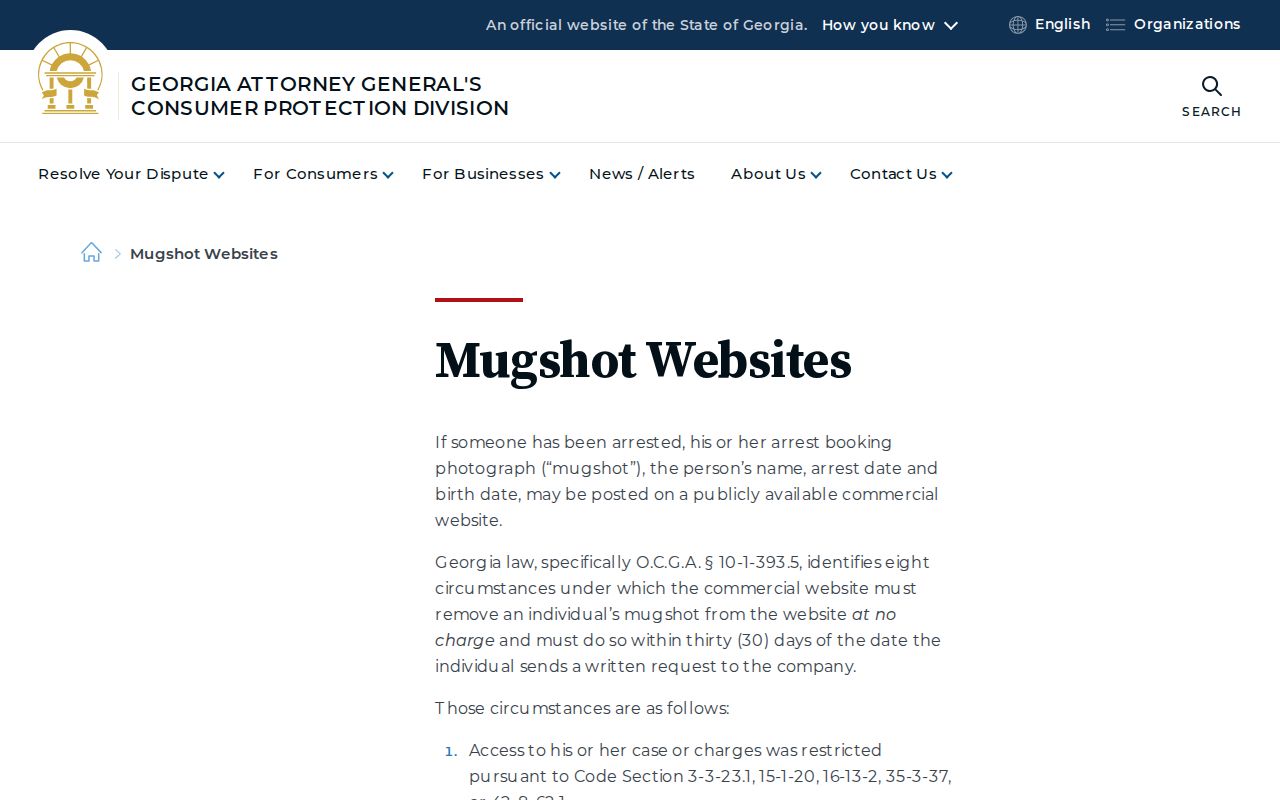
The guidance supports a free written-removal path for qualifying commercial copies. It does not rewrite the underlying court record.
Georgia Limits Booking Photo Disclosure
O.C.G.A. 35-1-19 is distinctive because it focuses on the requester's planned publication and payment demand. A law-enforcement agency may require a sworn statement about purpose. Knowingly making a false statement carries legal risk. A routine request for identification or case verification should be clear and accurate about its purpose.
The booking-photograph statute is captured below.
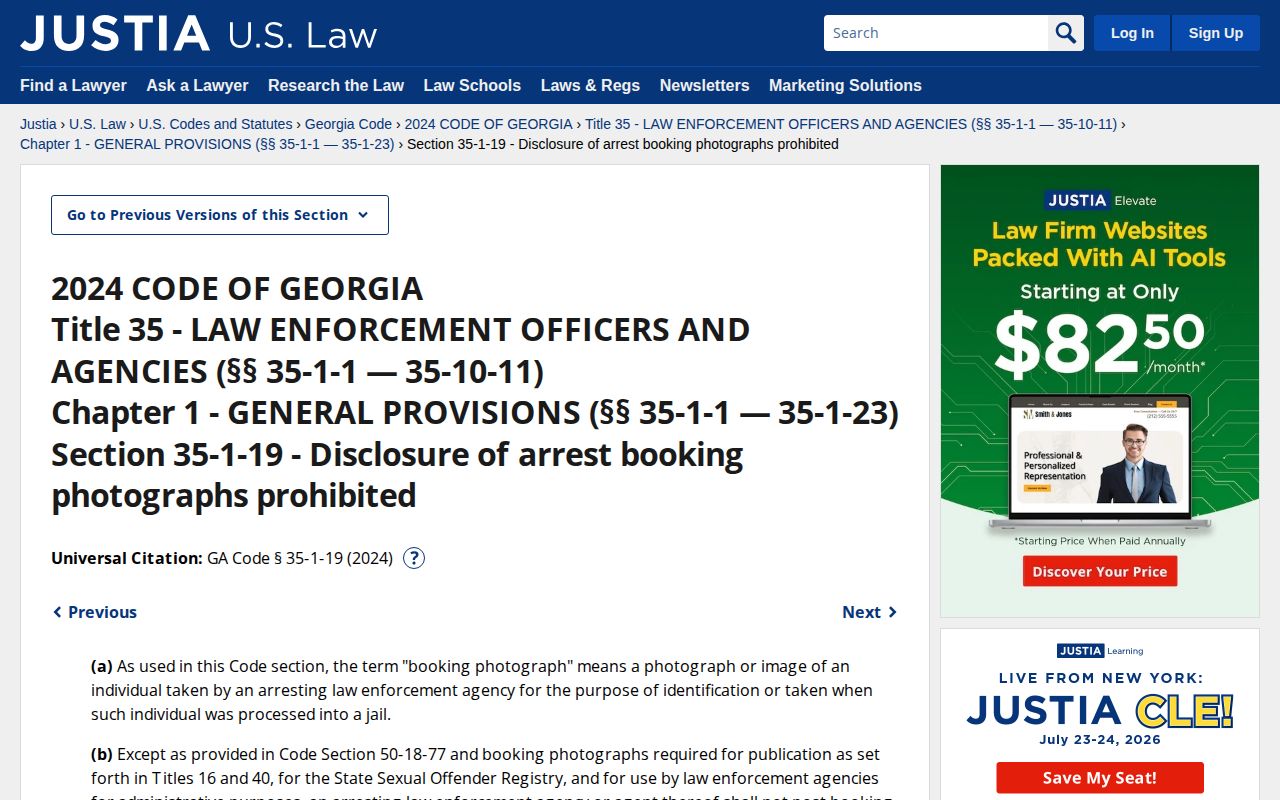
This rule explains why “public record” does not always mean unrestricted online display.
Greene County Photo Identity Checks
A photograph should be matched to the booking, not merely to a familiar face. Ask for the person's full name, booking date, case number, and charge listed in the same file. The sheriff's statutory jail record also carries age, sex, race, commitment process, issuing court, and commitment date. Those fields can separate people with similar names.
A photo has limited meaning on its own. It shows appearance during one booking. It does not show the later disposition, discharge reason, or current custody status. Read the court docket for dismissal, plea, sentence, or restriction, and read the jail discharge fields for the way county custody ended.
Greene County GDC Offender Photos
GDC says photographs display automatically in Find an Offender when available. That warning is useful because a state search may reveal an image without a separate click. It also means a user should prepare for an image to appear on screen.
Use GDC only when the person entered state custody. A county detainee who bonded out does not become a GDC offender merely because the arrest happened in Georgia. If the Greene County jail transferred the person after sentencing, search by name, GDC ID, description, or case number and allow time for intake.
GDC also warns that online information is not guaranteed complete. Written verification goes to Inmate Records and Information at PO Box 1529, Forsyth, GA 31029. The photo can aid identification, but the state record and court case remain the sources for status and sentence.
Greene County Court Photo Context
Magistrate Court handles first appearances, bond hearings, preliminary hearings, and some criminal matters. Those records can explain why a recently booked person left the jail. Superior Court records address felony disposition, sentencing, and later revocation. Neither court should be assumed to host a mugshot gallery.
Use the case file to restore context around the image. A bond release leaves the charge pending. A dismissal or nolle prosequi has a different meaning. A transfer order may show that the person left the county jail for another custodian. The booking photo alone cannot distinguish those events.
Greene County Mugshot Record Boundaries
County, state, and federal photo records should remain separate. The Greene County Sheriff's Office controls the county booking file. GDC may display a state-offender photograph. Federal agencies have their own record rules. VINE is mainly a status and notification service, so a missing photo there says little about whether the sheriff or GDC holds one.
A transfer can produce more than one image over time. The county booking photograph documents local intake. GDC rules refer to inmate photographs in the state system, and Find an Offender may show the later state image. Compare the agency and date rather than assuming one replaces the other.
When an agency denies or limits access, ask for the statute or exemption applied and whether a redacted portion can be produced. Georgia's Open Records Act requires a lawful response, but specific booking-photo restrictions still govern. Keep the written request and reply. They show which office was asked, which image was sought, and why access was limited.
Greene County Photo Request Results
A records response may produce the image, withhold it under a cited rule, or state that no responsive photo was located. Each result means something different. “No record located” does not prove no arrest occurred if the name, date, or agency was wrong. A denial should identify the legal basis. A produced image still needs the matching booking data.
If the sheriff locates multiple bookings, narrow the request by date or case. Do not assume the newest photo belongs to the case being researched. Ask that the booking identifier accompany the image. Then compare it with the court docket and discharge record.
For GDC, an unavailable photo may reflect the public record as displayed rather than the absence of all internal images. GDC's public search says photographs appear automatically when available. Written verification can address state-record questions that the online page does not settle.